
Reading Settings
Allama Iqbal Quotes – Top 30 with Meaning
Reviewed by TSG Editorial Team
Our editorial team creates and reviews educational content for students.
“From ‘Man is the sculptor of his own fate’ to ‘Time is a sword’ — these 30 quotes capture the heart of Allama Iqbal’s philosophy of Khudi (selfhood), courage, and self-made destiny, with an easy explanation for each.”
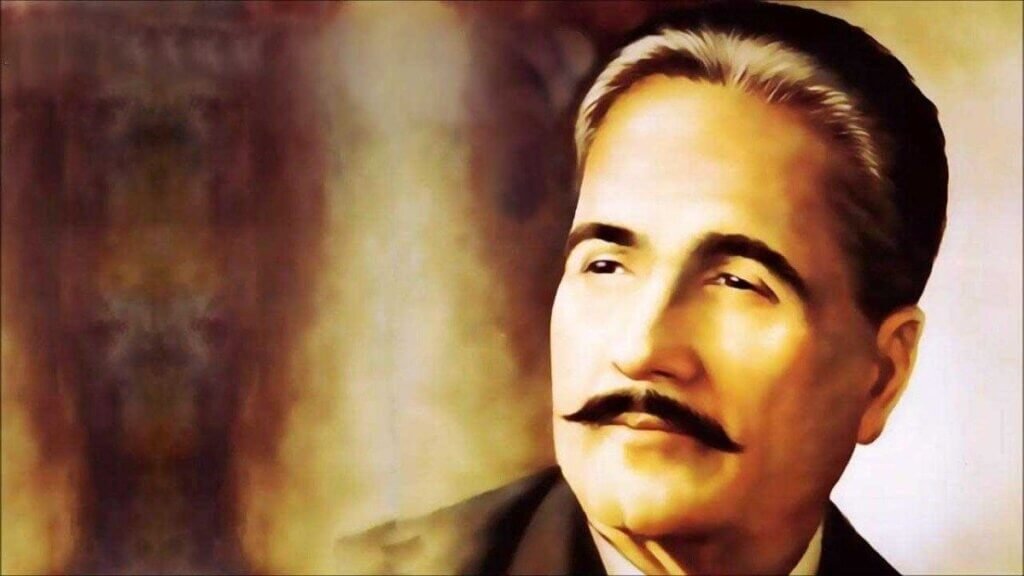
Quotes of Allama Iqbal
These quotes highlight Allama Iqbal’s views on selfhood (Khudi), self-reliance, youth, faith, character, action, and the destiny of nations.
1. “Raise your selfhood to such a height that before every decree God asks: what is your will?” — Allama Iqbal
Explanation: Believe in yourself so much and work so hard that you become the master of your own destiny.
2. “There are worlds beyond the stars, and still more trials of love to come.” — Allama Iqbal
Explanation: Human potential, life, and spiritual passion do not end at the physical limits of our universe. Life has endless possibilities and challenges, so one should not stop but keep striving for higher goals.
3. “Create your own world if you are among the living.” — Allama Iqbal
Explanation: Don’t copy others. Build your own path, dreams, and future with your own hard work. You must create your own reality and shape your own destiny.
4. “The destiny of nations lies in the hands of individuals. Every person is a star in the fate of the nation.” — Allama Iqbal
Explanation: A country’s future is shaped entirely by the actions, character, and choices of its individual citizens. One person can change the future of a whole country.
5. “Teach the youth the practice of selfhood, for in the selfhood of the self lies the survival of the nation.” — Allama Iqbal
Explanation: A nation survives and thrives only when its young people discover their inner worth, reject blind imitation, and cultivate self-reliance, moral courage, and personal accountability.
6. “Man is the sculptor of his own fate.” — Allama Iqbal
Explanation: Your life is shaped by your own choices, hard work, and actions rather than by luck or a pre-written destiny, much like an artist carving a statue out of stone.
7. “The nation that does not produce great men cannot survive.” — Allama Iqbal
Explanation: A country cannot grow or stay alive if it fails to raise strong, visionary, and capable leaders from its own people.
8. “Do not look at the world with the eyes of others. See with your own eyes.” — Allama Iqbal
Explanation: Think for yourself. Don’t copy other people’s opinions or follow the crowd blindly. Use your own judgment and vision.
9. “I am the dervish of the kingdom of birds—the eagle/falcon does not make nests.” — Allama Iqbal
Explanation: A person with high ambition lives like a dervish — free, detached, and unafraid. Like an eagle, such a person does not get tied down to comfort or a permanent “nest”; their home is the sky.
10. “The ultimate aim of the ego is not to see something, but to be something.” — Allama Iqbal
Explanation: Life is not about just watching others succeed or dreaming. The real purpose of the self is to become something great through action.
11. “Nations are born in the hearts of poets, they prosper and die in the hands of politicians.” — Allama Iqbal
Explanation: The idea and dream of a nation starts with thinkers, writers, and poets, but whether that nation grows or fails depends on how its leaders run it.
12. “Life is to be lived, not to be known.” — Allama Iqbal
Explanation: Don’t waste your whole life overthinking and analyzing. Get up and experience life through action, struggle, and courage.
13. “The falcon hunts in midair and knows no resting place.” — Allama Iqbal
Explanation: A person with high ambition is always on the move. They don’t wait for comfort or a safe place; they create opportunities while staying in action.
14. “Do not ask me for the secret of life. The secret of life is to live.” — Allama Iqbal
Explanation: Stop searching for some magical formula. Life has no hidden secret — the only way to understand it is to experience it yourself.
15. “The nation that does not value its youth, has no future.” — Allama Iqbal
Explanation: A country’s progress depends entirely on its young people. Ignoring, wasting, or misusing the energy of youth will cause that nation to collapse.
16. “Reason and heart are both necessary for the perfection of man.” — Allama Iqbal
Explanation: To become a complete human being, one needs both logic and emotion. Brain alone makes a person cold; heart alone makes a person blind. Both are needed.
17. “The teacher’s task is to awaken the soul, not to fill the mind.” — Allama Iqbal
Explanation: A good teacher doesn’t just dump information. Their real job is to awaken curiosity, character, and purpose in the student.
18. “Knowledge without action is like a falcon without wings.” — Allama Iqbal
Explanation: Learning that is never put to use is worthless. Like a falcon that can’t fly, a person with knowledge who doesn’t act can’t achieve anything.
19. “Islam is itself destiny and will not suffer a destiny.” — Allama Iqbal
Explanation: Islam is not something that depends on circumstances or other powers to decide its fate. It is a living force and a destiny-maker itself, shaping history rather than being shaped by it.
20. “Communities are made of individuals, and individuals are made of character.” — Allama Iqbal
Explanation: A nation is only as strong as the people in it, and a person is only as strong as their character. Fix the individual, and the community fixes itself.
21. “We are the nation that taught the world to stand on its feet.” — Allama Iqbal
Explanation: This reflects pride in Muslim civilization’s history, which once led the world in science, education, medicine, and values, giving knowledge and dignity to humanity.
22. “The spirit of Islam is life, not death.” — Allama Iqbal
Explanation: Islam is about building, progressing, and living with purpose. It’s not about despair, destruction, or giving up — real faith gives energy to live, not reasons to give up.
23. “Do not sell your faith for the world.” — Allama Iqbal
Explanation: Don’t compromise your principles, values, and self-respect just to get money, fame, a job, or approval. The world is temporary; character and faith are not.
24. “The world belongs to the man who is eager, not to the man who is hesitant.” — Allama Iqbal
Explanation: Opportunities don’t wait. The world rewards people who take initiative, who start, who try. Hesitation and overthinking make you miss your chance.
25. “Be not like the clay that is molded by the potter. Be like the potter that molds the clay.” — Allama Iqbal
Explanation: Don’t let circumstances, people, or society shape you. Shape your own life, your own habits, and your own destiny.
26. “The lamp of the seeker is lit by his own blood.” — Allama Iqbal
Explanation: Real success and real knowledge don’t come easily. Achieving anything great requires sacrifice, struggle, and giving part of yourself.
27. “To live is to burn, to be a candle and to melt.” — Allama Iqbal
Explanation: Real life is not comfort and safety. It is giving yourself completely to a purpose, even if it costs you — a candle that doesn’t melt gives no light.
28. “Time is a sword. If you do not cut it, it will cut you.” — Allama Iqbal
Explanation: Time is sharp and unforgiving. Either you use it to achieve things, or it will waste you — there is no neutral ground.
29. “The real joy of life is in having the purpose.” — Allama Iqbal
Explanation: Happiness doesn’t come from comfort, money, or entertainment. Real joy comes when you have a “why” to live for — a goal bigger than yourself.
30. “It is true we are made of dust, but flying is also our job.” — Allama Iqbal
Explanation: Yes, we are human — we are weak, we fail, we come from nothing. But that’s not an excuse. Our real job is to rise above, dream big, and fly like the Shaheen.
Frequently Asked Questions About Allama Iqbal
Muhammad Iqbal was given the title “Allama”, meaning “the great scholar” or “the erudite one”, because of his deep learning in philosophy, law, and poetry. He is also known as “Shair-e-Mashriq” (Poet of the East) and “Hakeem-ul-Ummat” (Sage of the Muslim Nation) for the wisdom found throughout his poetry and thought.
His full name was Muhammad Iqbal. He was born on 9th November 1877 in Sialkot, Punjab, and became known across the subcontinent as Allama Iqbal, the national poet-philosopher of Pakistan.
Allama Iqbal was a poet, philosopher, and politician whose Urdu and Persian poetry inspired the Muslims of British India. In his 1930 Allahabad Address, he proposed the idea of a separate, self-governing Muslim state in the north-western regions of India — a vision that later shaped the demand for Pakistan. He is honored as the spiritual father of the Pakistan movement, even though he did not live to see independence.
Allama Muhammad Iqbal was born on 9th November 1877 in Sialkot. He passed away on 21st April 1938 in Lahore, but his poetry and philosophy continue to inspire generations.
Khudi, or “selfhood”, is the central idea in Iqbal’s philosophy. It calls on individuals to develop self-awareness, self-respect, and inner strength so they can rise above imitation and passivity and become active shapers of their own destiny and that of their nation.
📚 Further Reading
Learn more about Allama Muhammad Iqbal through reliable historical sources.
Official Website of Allama Iqbal – Iqbal Academy Pakistan
Looking for more resources on Allama Iqbal? Read our Essay on Allama Iqbal and Paragraphs on Allama Iqbal.
Last updated: August 2026