
Reading Settings
Allama Iqbal Paragraph
“Explore simple and easy-to-learn paragraphs on Allama Iqbal in 50, 100 and 150 words, along with 10 important key points for students.” Use the text settings to adjust the font size and font family.
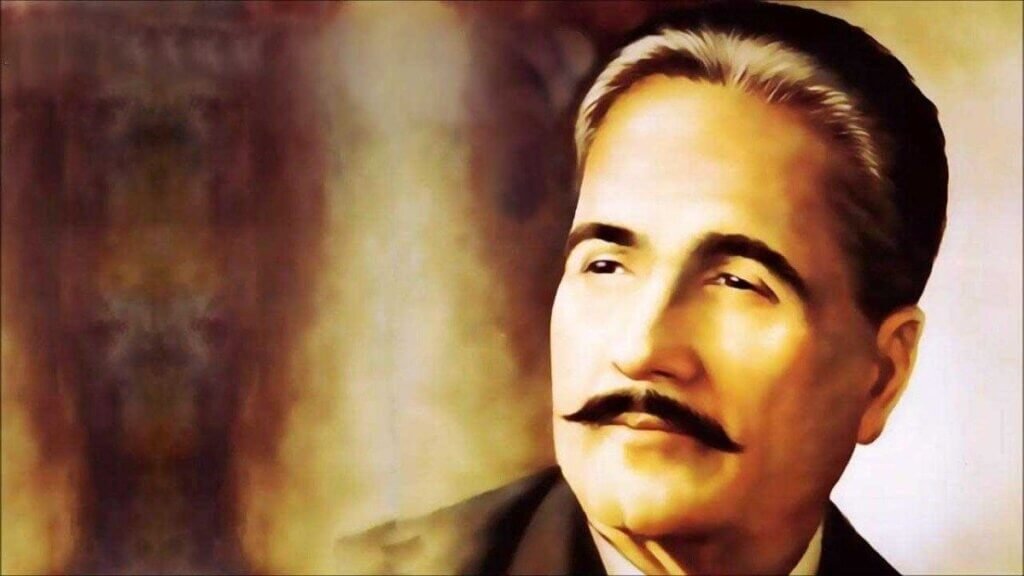
Choose the Allama Iqbal paragraph length that best suits your class, from 50 to 150 words & 10 key points.
Paragraph on Allama Iqbal – 150 Words For Class 8, 9, 10
Allama Muhammad Iqbal, also known as “Poet of the East”, was a legendary poet and philosopher of the Islamic history. Born in Sialkot, he completed his early studies in his hometown. He later studied in Government College Lahore where his teacher Sir Thomas Arnold encouraged him to pursue his studies in philosophy in Europe. He received his MA and completed PhD in Europe through Munich University. After completing his studies he returned to India as a barrister/lawyer even though his true passion lied in philosophy and poetry. He pursued his interest and wrote many poems. His famous poems include Tarana-e-Hindi and Bang-e-Dra in Urdu, Bal-e-Jibril and Zarb-e-Kalim, and his long philosophical poem Javid Nama. His role in Pakistan’s development was foundational, his ideology for a separate homeland for Muslims was proposed in 1930 in the Allahabad Address. His vision and poetry continue to inspire generations across the world.
Paragraph on Allama Iqbal – 100 Words For Class 5, 6, 7
Allama Muhammad Iqbal is one of the most influential poets and philosophers’ history has ever seen. Born in Sialkot in November 9, 1877 he completed his early education from his hometown and later studied in Europe where he became a lawyer and received PhD in 1907. He then returned to Lahore and started writing, with many of his writings encouraging Muslims and youngsters of that time. He also played a very crucial role in Pakistan’s development by introducing the idea of a separate homeland for Muslims. Allama Iqbal passed away on April 21, 1938. His vision and poetry continue to inspire generations across the world.
Paragraph on Allama Iqbal – 50 Words For Class 1 to 4
Allama Muhammad Iqbal was born on November 9, 1877 in Sialkot. He had a passion of poetry and philosophy and he followed it by studying in Europe. He wrote many poems and books and played an important role in Pakistan’s development. Today he is known as the Spiritual Father of Pakistan.
10 Important Points About Allama Iqbal Key Facts
- Allama Muhammad Iqbal was born on 9th November 1877 in Sialkot.
- He is known as the “Poet of the East” and “Mufakkir-e-Pakistan”.
- He completed his early education in Sialkot and later studied at Government College Lahore.
- His teacher Sir Thomas Arnold encouraged him to go to Europe for higher studies in philosophy.
- He did his MA in Philosophy and earned a PhD from Munich University in Germany.
- Though he became a barrister, his real passion was poetry and philosophy.
- His famous Urdu books include Bang-e-Dra, Bal-e-Jibril, and Zarb-e-Kalim, and Persian books include Asrar-e-Khudi and Javid Nama.
- He gave the philosophy of “Khudi” which means self-respect, action and confidence.
- In his 1930 Allahabad Address he presented the idea of a separate homeland for Muslims.
- He died on 21st April 1938 in Lahore and is remembered as the National Poet of Pakistan.
📚 Further Reading
Learn more about Allama Muhammad Iqbal through reliable historical sources.
Allama Iqbal – Iqbal Academy Pakistan
Looking for more resources on Allama Iqbal? Read our Essay on Allama Iqbal and Quotes on Allama Iqbal.
Last updated: August 2026