
Reading Settings
Essay on Allama Iqbal
Looking for an essay on Allama Iqbal? Here, you’ll find well-written essays in 200, 250, 300, and 500 words, suitable for students from Classes 1 to 12. All four versions are given below. Use the text settings to adjust the font size and family.
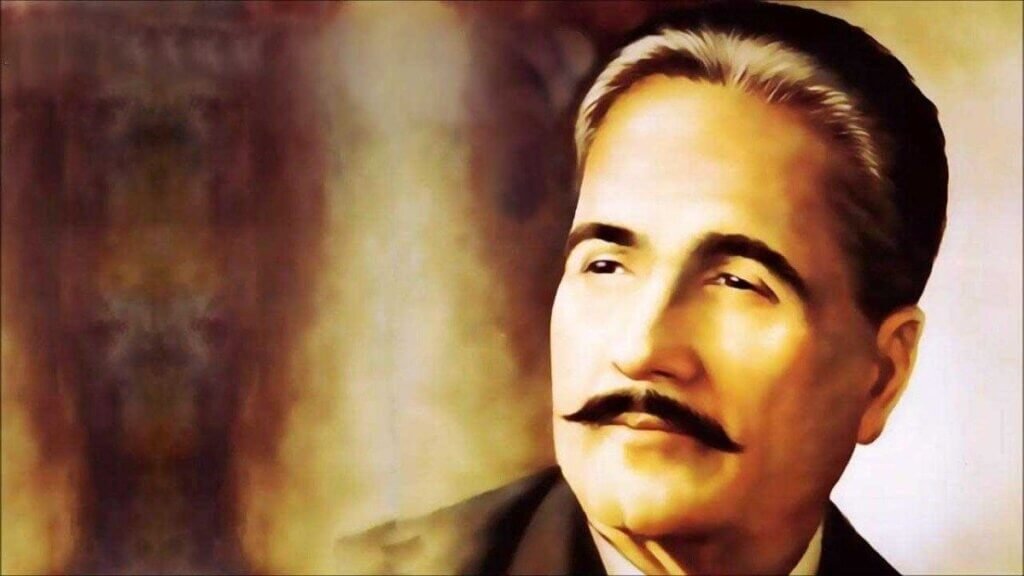
Choose the Allama Iqbal essay length that best suits your class, from 200 to 500 words.
Essay on Allama Iqbal – 500 WordsFor Class 9, 10, 12
Introduction
Allama Muhammad Iqbal is the ideological and spiritual father of Pakistan. He was the person who once dreamed of a separate homeland for Muslims. He was born on November 9, 1877 in Sialkot, which was under British rule at that time and is now a part of Pakistan. Allama Muhammad Iqbal was born into a devout ethnic Kashmiri family that had migrated from Kashmir to Sialkot in the 19th century. His father, Sheikh Noor Muhammad, was a tailor by profession, whereas his mother, Imam Bibi, was a deeply religious woman.
Early Life and Education
Allama Iqbal received his early education from a madrassa in Sialkot. He then joined the Scotch Mission School, where his teacher, Syed Mir Hassan, recognized his talent and nurtured his love for Persian and Arabic. He passed his matriculation in 1893 before moving to Government College Lahore, where he studied philosophy under Sir Thomas Arnold, who encouraged him to pursue further studies in Europe. He completed his Master of Arts (M.A.) in 1899 from Punjab University.
In 1905, Iqbal travelled to England for higher studies. He enrolled at Trinity College, Cambridge, where he studied philosophy. During this time, he also qualified as a barrister from Lincoln’s Inn, London. He then moved to Munich, Germany, where he completed his PhD from Munich University in 1907. His thesis, “The Development of Metaphysics in Persia,” combined Persian philosophical thought with the Western ideas he had studied in Europe. He returned to India in 1908 as a philosopher and poet with a new vision, one that blended Eastern spirituality with Western philosophy.
Philosophy and Poetry
After returning to Lahore, Iqbal practiced law, but his true passion remained poetry and philosophy. He wrote in both Urdu and Persian. One of the writings that first made him famous was Tarana-e-Hindi — also known as “Saare Jahan Se Achha” — which he wrote in 1904. Iqbal’s first Persian book was “Asrar-e-Khudi.” His famous poetry collections included Bang-e-Dra, Bal-e-Jibril, and Zarb-e-Kalim, along with his long philosophical poem Javid Nama. He also wrote for the youngsters of the subcontinent, encouraging them to work hard, believe in themselves, and build strong character.
His Role in Partition
Iqbal’s contribution to the creation of Pakistan is one of his most important legacies. In his historic address at the All-India Muslim League session in Allahabad in 1930, he proposed that the Muslim-majority regions of Punjab, Sindh, Balochistan, and the North-West Frontier Province be united into a separate state. This idea is widely seen as the first formal vision of Pakistan. For this reason, he is remembered as the ideological founder of Pakistan. Iqbal also exchanged several letters with Jinnah, encouraging him to lead the Muslims of India, which strengthened the political movement that eventually led to the creation of Pakistan in 1947.
Conclusion
Allama Iqbal was not just a poet but also a visionary leader and philosopher. In recognition of his literary and intellectual contributions, Iqbal was knighted by the British Government in 1922, after which he became known as Sir Muhammad Iqbal. He passed away on April 21, 1938, in Lahore. Today, he is remembered as Pakistan’s national poet, and his poetry continues to inspire generations with its message of self-belief, unity, and purpose.
Essay on Allama Iqbal – 300 Words For Class 7, 8, 9
Allama Muhammad Iqbal, the legendary poet and philosopher and the Spiritual Father of Pakistan, was born on November 9, 1877 in Sialkot, a city of Punjab. He completed his early studies in Sialkot, where his teacher, Syed Mir Hassan, recognized his talent and love for Persian and Arabic. He later studied at Government College Lahore. His thirst for knowledge took him to Europe, where he studied under Sir Thomas Arnold. He completed his M.A. in 1899 and later earned a PhD from Munich University. He also studied law and became a barrister during his time in Europe.
After completing his studies, he returned to Lahore and practiced law, although his real passion lay in poetry and philosophy. He then followed his passion and started writing. His first famous poem was Tarana-e-Hindi — also known as “Saare Jahan Se Achha.” His first Persian book was “Asrar-e-Khudi.” His famous poetry collections included Bang-e-Dra, Bal-e-Jibril, and Zarb-e-Kalim, along with his long philosophical poem Javid Nama. He also wrote for the youngsters of the subcontinent, encouraging them to work hard, believe in themselves, and build strong character.
One of Allama Iqbal’s most important contributions was his role in the development of Pakistan. He presented the need for a separate homeland for Muslims in the Allahabad Address of 1930. Allama Iqbal also exchanged several letters with Jinnah, encouraging him to lead the Muslims of India, which strengthened the political movement that eventually led to the creation of Pakistan in 1947.
Sir Allama Muhammad Iqbal passed away on April 21, 1938, in Lahore — nine years before his dream of a separate homeland for Muslims became a reality. Even so, he is remembered as the Spiritual Father of Pakistan. His tomb is in Lahore, and his birthday is celebrated every year as Iqbal Day. His legendary poetry and philosophy continue to inspire generations.
Essay on Allama Iqbal – 250 Words For Class 5, 6, 7
Allama Muhammad Iqbal, born on November 9, 1877 in Sialkot, was a legendary poet and philosopher of Islamic history. He received his early education in Sialkot. He later studied at Government College Lahore before moving to Europe, where he qualified as a barrister and later received a PhD from Munich University.
He returned to Lahore as a lawyer in 1908, but his true passion lay in poetry and philosophy. He began writing poetry and prose, much of it addressing the challenges Muslims faced in the early 20th century, including colonialism and a loss of collective identity. His first Persian work, Asrar-e-Khudi (1915), introduced his philosophy of khudi, or selfhood. His other major works include Tarana-e-Hindi and Bang-e-Dra in Urdu, Bal-e-Jibril and Zarb-e-Kalim, and his long philosophical poem Javid Nama. Through his poetry, Iqbal also urged the youth of his time to strive with courage and ambition, often using the eagle as a symbol of strength, self-reliance, and the will to rise above complacency.
Allama Iqbal’s role in the creation of Pakistan was foundational. He proposed a separate homeland for Muslims in the Allahabad Address of 1930. He worked closely with Quaid-e-Azam to make his dream become a reality. Because his vision laid the ideological foundation on which Jinnah later built the political movement, Iqbal is remembered as the “Spiritual Father of Pakistan.”
Allama Iqbal was a man of great vision, deep wisdom, strong faith, and unshakable determination, who dedicated his life and work to the upliftment of Muslims of the subcontinent. Though Iqbal passed away in 1938 before seeing Pakistan, his dream came true through the efforts of Quaid-e-Azam Muhammad Ali Jinnah.
Essay on Allama Iqbal – 200 WordsFor Class 1 to 4
Allama Muhammad Iqbal, the visionary and Spiritual Father of Pakistan, was born on November 9, 1877 in Sialkot. He is one of the most influential poets and philosophers of Muslim history. He completed his early studies in Sialkot, later studied at Government College Lahore, and then moved to Europe for higher studies, where he qualified as a barrister and also received his PhD from Munich University in 1907.
He returned to Lahore as a lawyer, but his love for poetry and philosophy soon overshadowed his legal career. He started writing in the early 20th century, with many of his writings awakening the Muslims and youngsters of the subcontinent. His famous writings include Tarana-e-Hindi and Bang-e-Dra in Urdu, Bal-e-Jibril and Zarb-e-Kalim, and his long philosophical poem Javid Nama. He also wrote extensively in Persian, producing some of his most influential philosophical poetry.
One of the reasons for his fame is the role he played in Pakistan’s development. He was the one who introduced the idea of a separate homeland for Muslims in his historic address at the All-India Muslim League session in Allahabad in 1930, where he proposed that Muslims of India be granted a separate state in the northwestern regions of the subcontinent. Even today, his poetry continues to inspire generations.
Frequently Asked Questions About Allama Iqbal
📚 Further Reading
Learn more about Allama Muhammad Iqbal through reliable historical sources.
Allama Iqbal – Iqbal Academy Pakistan
Looking for more resources on Allama Iqbal? Read our Paragraph on Allama Iqbal and Quotes on Allama Iqbal.
Last updated: August 2026